
Mathematics
Sexton’s Manor Primary School, we believe that mathematics is an essential life skill that develops logical thinking, problem-solving and resilience. Our maths curriculum aims to ensure that all pupils become confident, fluent and enthusiastic mathematicians who can apply their knowledge in a range of contexts.
We teach mathematics using the White Rose Maths Scheme of Learning, which is aligned with the National Curriculum and based on a mastery approach. This ensures that pupils develop a deep and secure understanding of mathematical concepts before moving on, with learning carefully sequenced and built upon year by year.
In addition, we use the Mastering Number Programme, developed by the NCETM and supported by the Department for Education, to strengthen pupils’ understanding of number, particularly in the early years and Key Stage 1. This programme supports children in developing fluency with number facts, a strong sense of number relationships and confidence in working with numbers, providing a secure foundation for future mathematical learning.
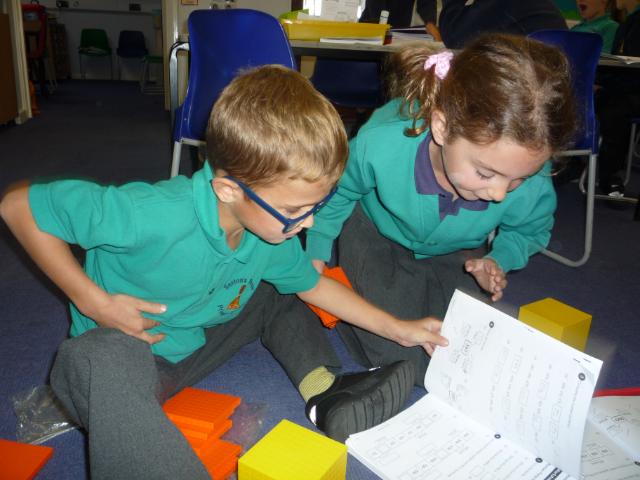
Lessons follow a small-steps approach, allowing children to explore concepts in depth. Mathematical ideas are taught using a concrete–pictorial–abstract (CPA) approach, enabling pupils to move from practical resources, to visual representations, and finally to abstract mathematical thinking. This supports all learners in accessing the curriculum and developing confidence.
Pupils are regularly given opportunities to reason mathematically, solve problems and explain their thinking using accurate mathematical vocabulary. Fluency is developed through daily practice and the revisiting of key concepts to support long-term retention.
Assessment for learning is used to identify and address misconceptions quickly, with appropriate support and challenge provided to ensure all pupils make progress. High expectations are maintained for every child, promoting positive attitudes and resilience in mathematics.
By the time pupils leave Sexton’s Manor Primary School, they will have developed a secure understanding of number and mathematical concepts, confidence in their abilities, and the skills needed to apply mathematics successfully in everyday life and future learning.